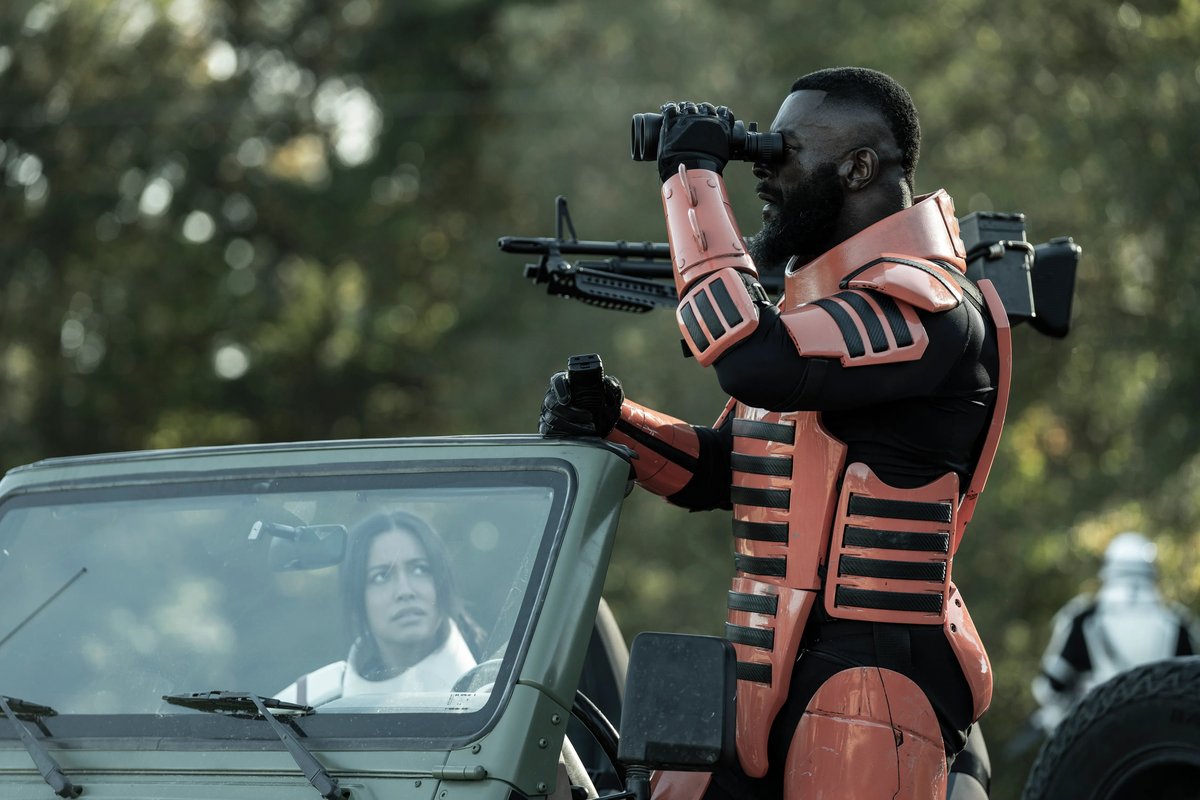
The final credits rolled on The Walking Dead's eleventh and final season, "Rest in Peace," on November 20, 2022, marking the end of a remarkable 12-year television journey. But for many, Analyzing The Walking Dead Season 11 Finale and Franchise Legacy isn't about an ending; it's about a pivotal transition point for a universe that’s anything but dead. This wasn't just a finale; it was a carefully constructed bridge, resolving core conflicts while strategically launching the next phase of its ambitious narrative.
This final episode, extended to a hefty 65 minutes, delivered on many fronts: emotional goodbyes, intense action, satisfying character resolutions, and tantalizing glimpses into the future. It reminded us why we've stayed glued to our screens for over a decade, proving that even as one chapter closes, the human spirit—and the fight against the undead—endures.
At a Glance: The Finale's Key Takeaways
- A Dual Resolution: The finale wrapped up the immediate conflict with Pamela Milton and the Commonwealth, while simultaneously setting the stage for multiple character-focused spin-offs.
- Major Character Death: Rosita Espinosa made a heroic sacrifice, leaving a lasting impact on her loved ones and the future of the community.
- Pamela Milton's Fate: The corrupt governor was arrested by Mercer, avoiding a self-imposed death, suggesting a "fate worse than death" within the burgeoning new Commonwealth.
- One Year Later: A significant time jump revealed a reformed Commonwealth, with familiar faces in new leadership roles, signifying a hopeful new era.
- Daryl's Departure: Our beloved Daryl rode off into the sunset (or rather, a grey dawn), embarking on a quest to find Rick and Michonne.
- Rick & Michonne Return: A powerful, standalone epilogue saw Andrew Lincoln and Danai Gurira reprise their iconic roles, revealing their separate, perilous circumstances and their ongoing fight against the formidable Civic Republic Military (CRM).
- The Future is Franchise: The episode directly fed into three major upcoming spin-offs: Dead City (Maggie & Negan), Daryl Dixon (Daryl in France), and The Ones Who Live (Rick & Michonne).
The Commonwealth's Last Stand: A Bloody Farewell
The finale, aptly titled "Rest in Peace," threw us immediately into chaos. Judith Grimes, wounded by Pamela Milton's bullet (intended for Maggie), was critically injured, sending Daryl on a desperate search for a surgeon amidst a relentless swarm of "smart" walkers pouring into the Commonwealth. This opening sequence was a microcosm of the show's strengths: high-stakes personal drama intertwined with the relentless, evolving threat of the undead.
Meanwhile, Pamela Milton, still seething over her son Sebastian's death, exacted her revenge by kidnapping Coco and another baby, targeting Eugene. It was a classic Walking Dead move, showcasing the depths of human depravity even as the world literally crumbled. Rosita, Gabriel, and Eugene’s heroic rescue mission underscored the unyielding importance of protecting the innocent, a theme that has consistently anchored the series. Once Judith was stabilized, the group turned their attention to the larger threat, convincing a reluctant Pamela to open the "Estates" neighborhood, funneling the overwhelming walker horde into a contained area.
The subsequent rigging and blowing up of the "smart" zombie horde within the Estates was a spectacular, cathartic action sequence. It wasn't just about survival; it was about reclaiming their home and future from both the undead and the living oppressors. With the immediate threats quelled, the survivors gathered for a celebratory family meal, a poignant moment of peace hard-won through immense sacrifice.
The Human Cost: Rosita's Sacrifice & Other Fates
No Walking Dead finale would be complete without significant loss, and "Rest in Peace" delivered three. Jules was tragically eaten by the encroaching "smart" zombies, a grim reminder of the ever-present danger. Luke, bitten while trying to save Jules, bled out after a desperate, failed amputation attempt, leaving Magna to ensure he didn't turn. These deaths, while impactful, served largely to heighten the stakes for the main cast.
The true emotional gut punch came with Rosita Espinosa's death. A stalwart character who had grown from a stoic survivor into a compassionate mother and fierce leader, Rosita was bitten on the back while heroically saving Coco and another baby from a walker horde. Her final hours were spent surrounded by her chosen family – Gabriel, Eugene, Coco, and others – exchanging heartfelt goodbyes. Her death was a powerful, earned moment of sacrifice, cementing her legacy within the group. In a beautiful tribute, Eugene and Max later named their daughter 'Rosie' in her honor, ensuring her spirit lived on. Rosita's arc, from Abraham's companion to a formidable protector, encapsulated the series' enduring message of finding purpose and family amidst despair.
Pamela Milton's Justice: A Fate Worse Than Death?
The corrupt Commonwealth Governor Pamela Milton, whose numerous crimes included shooting Judith (though aiming for Maggie), diverting zombies to lower-class quadrants, and kidnapping Eugene's associates, finally faced her reckoning. She was arrested by Mercer, Daryl, and the group, a satisfying conclusion to her tyrannical reign.
Perhaps the most intriguing moment of Pamela’s storyline was when Maggie prevented her from intentionally letting herself be killed by a zombified Lance Hornsby. Maggie, ever the pragmatist, seemingly believed that prison – living to face the consequences of her actions within a reformed system – would be a "fate worse than death" for a woman accustomed to absolute power. This choice underscored the series' complex exploration of justice and mercy, demonstrating that true redemption, or even true punishment, often lies in confronting one's past, not escaping it.
A Glimpse Into the Future: One Year On
After the climactic battle and Pamela’s arrest, the finale offered a hopeful flash-forward, jumping one year into the future. This glimpse provided closure for many characters and showcased the fruits of their labor. The Commonwealth, now under new management, was striving for a more democratic and equitable system.
- New Leadership: Ezekiel and Carol, two of the series' most beloved characters, assumed pivotal leadership roles within this reformed society, demonstrating their growth and commitment to building a better world. Mercer, embodying the disciplined yet compassionate heart of the Commonwealth army, also took on a leadership position, working to ensure true justice and order.
- Continued Service: Aaron and Lydia continued to undertake crucial supply runs, highlighting the ongoing need for resources and vigilance in the post-apocalyptic world. Connie, ever the truth-seeker, worked in administration, undoubtedly playing a vital role in transparent governance.
- New Beginnings: Eugene and Max welcomed their daughter, Rosie, a touching tribute to Rosita and a symbol of new life and hope. Yumiko and Magna rekindled their relationship, finding solace and joy in companionship after so much turmoil. These personal moments emphasized that even in a world reshaped by tragedy, love, family, and simple happiness endure.
This "One Year Later" segment served as a comforting epilogue, assuring viewers that the sacrifices were not in vain and that the survivors had indeed built a more stable, just society. It’s a testament to the series' core theme of hope – that even after the darkest nights, the sun can rise again.
Setting Sail: Daryl, Rick, and Michonne's Next Chapters
The finale's most poignant and future-defining moments revolved around Daryl, Rick, and Michonne. Daryl shared a heartfelt, tearful goodbye with Carol, a relationship that has been the emotional bedrock of the entire series. Their silent understanding, their shared history, spoke volumes. Then, Daryl, ever the lone wolf, departed on his motorcycle, embarking on a new, personal journey: to search for Rick and Michonne. This departure wasn't just a character leaving; it was the direct setup for his own spin-off, promising new adventures and challenges.
In a standalone, epic epilogue, Andrew Lincoln and Danai Gurira reprised their iconic roles as Rick Grimes and Michonne, respectively. Rick, last seen gravely injured and taken by a Civic Republic Military (CRM) helicopter in Season 9, appeared in a CRM jacket at a muddy waterfront. Confronted by a CRM helicopter demanding his surrender, he grinned defiantly and flung a backpack (containing items Michonne later finds) onto a boat. This scene, set earlier in the timeline than Michonne's, painted a picture of a Rick still fighting, still rebelling, and clearly a prisoner of the formidable CRM.
Michonne, who left in Season 10 to find Rick, was seen in formidable samurai-style gear, riding towards a massive zombie horde, determined and unyielding. Her journey is clearly fraught with danger, yet her resolve to find Rick is unwavering. These powerful, if brief, appearances confirmed what fans had hoped for years: Rick and Michonne's story is far from over, and it's intertwined with the most significant overarching threat in the Walking Dead universe.
The CRM: Unpacking the Franchise's Biggest Threat
The Civic Republic Military (CRM) is not just another group of survivors; it's a powerful, enigmatic organization with advanced technology (including helicopters and vast resources). Introduced implicitly with Rick's disappearance and explored further in The Walking Dead: World Beyond, the CRM represents the largest, most organized, and potentially most dangerous faction in the franchise. Their presence looms large over Rick and Michonne’s future, suggesting a high-stakes narrative far beyond typical walker encounters. Their secrecy and immense power hint at a complex political landscape where survival isn't just about zombies, but about the very nature of civilization and control.
The Evolution of the Threat: Smart Zombies and Beyond
The finale reinforced a crucial evolution in the Walking Dead universe: the presence of "Variants," often referred to as "smart" zombies. These aren't the shambling, predictable walkers of old. Exhibiting unusual behaviors like climbing walls, opening doors, or even wielding rudimentary tools, these variants introduce a new, more terrifying dynamic to survival. While briefly seen in the main series finale, their true scope and implications were first extensively explored in The Walking Dead: World Beyond and are set to play a significant role in The Walking Dead: Daryl Dixon, where Daryl will encounter them in a new, chilling context in France. The universe also features "Burned Walkers," adding another layer of environmental and biological threat. This diversification of the undead threat ensures that the core premise of the franchise remains fresh and challenging, even after over a decade.
Beyond the Credits: The Enduring Themes of TWD
From its very first episode, The Walking Dead has always been more than just a zombie show. It's a profound exploration of humanity pushed to its limits. The Season 11 finale, "Rest in Peace," beautifully encapsulated these enduring themes:
- Survival: The constant, brutal struggle against both the undead and human adversaries remains the foundational element.
- Humanity: How much of ourselves do we retain when everything is stripped away? The finale constantly challenged characters to uphold their moral compass.
- Morality: The choices made under duress – Maggie's decision regarding Pamela, Rosita's sacrifice, Negan's apology – force characters (and viewers) to grapple with right and wrong in a world without easy answers.
- Community: The power of coming together, building new families, and defending them against all odds is the beating heart of the series. The formation of the new Commonwealth is a testament to this.
- Leadership: The finale showed the transition of leadership and the ongoing responsibility of guiding a community towards a better future.
- Hope: Despite immense loss and seemingly insurmountable obstacles, the ability to find and nurture hope, to envision a better tomorrow for future generations, defines the resilience of these characters. The "One Year Later" segment is a powerful statement on this.
These themes are the true legacy of The Walking Dead, resonating deeply with audiences long after the last walker is dispatched.
The Unfolding Saga: What's Next for The Walking Dead Universe
The "Rest in Peace" finale made it unequivocally clear: the story of The Walking Dead is far from over. It's merely evolving, expanding, and diversifying. The franchise continues with several highly anticipated spin-off series, each promising to delve deeper into specific character journeys and unexplored corners of the apocalypse.
- The Walking Dead: Dead City: This six-episode mini-series, premiering in April 2023, is a gritty, urban adventure following the unlikely duo of Maggie and Negan. Set in a walker-infested Manhattan, they must navigate the ruins of New York City to rescue Maggie's son, Hershel. This series promises to explore their incredibly complex relationship, forcing them to depend on each other despite their traumatic past, particularly after Negan's raw apology in the finale. The backdrop of a decaying New York offers a fresh visual and environmental challenge.
- The Walking Dead: Daryl Dixon: Daryl's journey takes him far from home, beyond the borders of the United States, all the way to Paris, France. This series, set to debut in 2023, will undoubtedly push Daryl to his limits as he encounters new cultures, new threats, and crucially, the more evolved "smart" zombies that exhibit greater intelligence and agility. It's a bold move for the franchise, globalizing the apocalypse and expanding the lore of the walker variants.
- The Walking Dead: The Ones Who Live (Rick and Michonne series): Originally conceived as a movie trilogy, this limited series is the most eagerly awaited by many fans. It will finally reunite Rick Grimes and Michonne Hawthorne, exploring their separate, perilous circumstances and their individual and collective fight to return to each other. The series is expected to deeply explore the powerful and terrifying reach of the CRM, detailing Rick's capture and Michonne's relentless quest. This is where the overarching CRM mystery, hinted at for years, will finally take center stage.
- Fear the Walking Dead: The original spin-off is continuing its run, with Season 8 having begun filming in August 2022. It continues to explore new characters and stories within the familiar Walking Dead universe, often showcasing the early days and different regional impacts of the outbreak.
- Tales of the Walking Dead: This anthology series, which has already aired, features new and familiar characters in self-contained, one-hour episodes. It's a fantastic format for exploring diverse narratives, backstories, and forgotten corners of the apocalypse without the burden of a continuous plotline.
Why the Spin-offs Matter: Expanding the World
These spin-offs aren't just cash grabs; they represent a strategic decision to expand the Walking Dead universe in meaningful ways. By focusing on specific, beloved characters and placing them in entirely new environments (Manhattan, Paris, the heart of the CRM), the franchise can explore different facets of the apocalypse, introduce new types of threats (like the increasingly intelligent "smart" zombies), and delve deeper into the political and social structures that have emerged. They allow for a more focused narrative, free from the constraints of a sprawling ensemble cast, offering fresh perspectives and ensuring the world continues to feel vast and full of untold stories.
The Undeniable Legacy: More Than Just Zombies
The Walking Dead's run was monumental. It transcended its genre to become a cultural phenomenon, prompting global conversations about humanity, leadership, and the thin veneer of civilization. It had its highs and lows, its periods of intense critical acclaim, and moments that drew widespread fan frustration. Yet, its ability to consistently deliver character-driven drama against a backdrop of existential dread kept millions captivated. The finale, despite needing to serve multiple masters (conclusion, setup, fan service), largely succeeded in providing a sense of both closure and limitless possibility.
Its legacy isn't just in the ratings or the sheer volume of content it spawned; it's in the way it challenged viewers to consider what it truly means to survive, to build, and to hope when everything has been lost. It explored the darkest corners of the human heart and celebrated its most resilient aspects, leaving an indelible mark on television history.
Looking Ahead: The Road Still Traveled
While the main series has ended, the road ahead for The Walking Dead franchise is clearly still long and winding. The finale closed a major chapter but opened many more, inviting you to continue the journey alongside your favorite characters (and some new ones). The fight for survival, the quest for connection, and the eternal dance between hope and despair are far from over in this ever-expanding universe. So, buckle up—the apocalypse is just getting started. If you're eager to see what comes next, you might want to Explore The Walking Dead Season 12 as the universe continues to evolve.