It’s an apocalypse where the dead walk, but the narratives themselves refuse to lie down. For over a decade, fans of The Walking Dead have navigated a world of relentless threats, profound loss, and unexpected hope, watching beloved characters evolve (or tragically perish). Now, as the flagship TV series wraps up its epic run, many are asking a crucial question: How does its ending stack up against the original comic book's definitive conclusion, and what does this Comparing TWD Show's Ending to Comic Book Source Material for Future Ideas tell us about the future of this sprawling universe?
The final episodes of the TV show promise a resolution for the series, yet simultaneously, they're laying groundwork for a new wave of stories. This dual mandate creates a fascinating tension, starkly different from the comic's singular, conclusive vision. Get ready to dissect the choices made, the roads taken, and the potential paths still ahead.
At a Glance: Two Endings, Many Futures
- Comic Book Ending: Features a significant 25-year time jump, a peaceful society, and an adult Carl Grimes leading the charge, providing a truly definitive, character-focused conclusion.
- TV Show Ending: A "remix" of Robert Kirkman's story, concluding the main series arc while explicitly setting up multiple direct character spinoffs (Rick/Michonne, Daryl, Negan/Maggie).
- Key Divergences: Carl Grimes’ death in the show, Sophia's survival in the comic, Rick's earlier departure from the show, and the necessity to leave character arcs open for future series.
- Future Ideas: The show's ending serves as a launchpad, not a final stop. While specific comic plots are now impossible, the themes and world-building from Kirkman's original vision still offer rich inspiration for the expanding TWD universe.
- Fan Impact: The knowledge of upcoming spinoffs has, for some, reduced the stakes and suspense of the main series finale, creating a unique challenge for the showrunners.
Setting the Stage: Two Worlds, One Apocalypse, Different Destinies
Imagine a shared dream, then two separate teams interpreting it. That’s essentially what happened with The Walking Dead. Robert Kirkman’s comic book series, a groundbreaking narrative that began in 2003, offered a brutal yet deeply human exploration of survival. It was a complete, contained story, consciously designed to have an ending. When the TV show launched in 2010, it began as a remarkably faithful adaptation, but as its popularity soared, creative decisions and real-world factors (like actor departures) began to diverge its path significantly from the source material.
This isn't about which is "better"—it's about understanding two distinct artistic visions for the same world. The comic had the luxury of a planned endpoint, crafted by a single author. The show, as a long-running television phenomenon, needed to navigate network demands, an ever-shifting cast, and the insatiable appetite of a global audience. These differing pressures inevitably led to radically different conclusions and, crucially, different blueprints for what comes next.
The Comic's Definitive Swan Song: A Glimpse into a Hard-Won Future
Robert Kirkman’s The Walking Dead comic book concluded in 2019 with issue #193, delivering an ending that many fans considered both surprising and profoundly satisfying. It wasn't a blaze of glory or a desperate last stand; it was an epilogue.
The comic skipped a staggering 25 years into the future. By this point, society had largely rebuilt. Walkers were still a threat, but a manageable one, often displayed in traveling "freak shows" as relics of a bygone era. We saw an older, wiser Carl Grimes as the protagonist, a married man with a daughter named Andrea (a poignant tribute). He led the Grimes Family Farm, a thriving testament to his father’s enduring legacy. And in a particularly heartwarming twist for comic readers, Carl's wife was none other than Sophia, who, in the comic, had survived the original Greene farm massacre and grown into a strong, resilient woman.
This ending was about legacy, hope, and the human spirit's capacity to not just survive, but to truly live again. It showcased a world where the new generation wasn't haunted by the same existential dread, where trains ran between communities, and justice was administered in courts, not with guns. It felt complete, a full stop on a brutal, beautiful saga. The only time Kirkman revisited this world was for the "Negan Lives" one-shot, a poignant character study that reinforced Negan's eventual, quiet peace.
The Show's "Remix": Crafting a New Legacy (and Spinoffs)
Former showrunner Scott M. Gimple aptly described the TV finale as a "remix" of Robert Kirkman's story. This isn't just a marketing term; it's a fundamental approach to concluding a narrative that, by necessity, must both resolve and expand. While the comic offered a definitive conclusion, the TV series finale, scheduled for November 20, operates under a different imperative: setting up an ambitious slate of spinoffs.
This means that while the main series attempts to offer "a really definitive conclusion for both the series and then each individual character," as Gimple stated, it must also leave certain doors wide open. This "remix" involves taking familiar elements—the Commonwealth, key character arcs—and reconfiguring them to serve the show's unique trajectory and future plans. It’s a delicate balancing act, aiming for both closure and continuation.
The challenge here is profound: how do you deliver a truly satisfying ending for a flagship series when viewers already know several major characters are simply walking off into their own new shows? Actor Jeffrey Dean Morgan, who plays Negan, has openly echoed this sentiment, admitting that the knowledge of upcoming spinoffs has, for some fans, "compromised the suspense" of the finale. It's tough to feel the ultimate stakes when you know Daryl, Rick, Michonne, and even Negan and Maggie will be back for more adventures. This is where the show's ending diverges most sharply from the comic's decisive finality.
Key Divergences: Where the Paths Veered (and Why)
Understanding the show's ending requires acknowledging the major forks in the road that began years ago. These aren't minor tweaks; they are foundational differences that made a faithful adaptation of the comic's conclusion impossible.
Carl Grimes' Tragic Fate
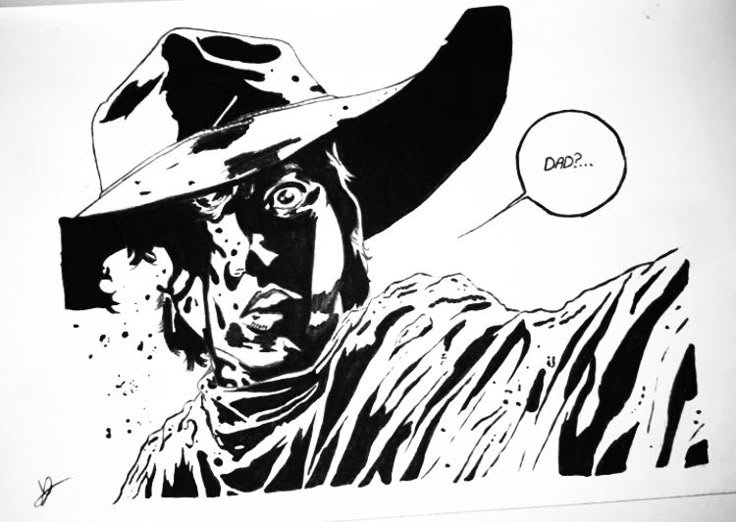
Perhaps the most significant divergence came with the death of Carl Grimes in Season 8. In the comic, Carl is the future, the character who carries on Rick's legacy and ultimately ushers in the new world. His survival and growth were central to the comic’s hopeful ending. Killing him off in the show meant that the entire bedrock of the comic's future-set epilogue was removed. The show had to find new ways to portray hope and legacy without him, often shifting that burden onto Judith and other younger characters.
Sophia's Unlikely Survival (in the Comic)
Another poignant difference involves Sophia. In the TV show, Sophia died tragically in Season 2, discovered as a walker in the Greene barn. It was a defining moment for Carol's character. In the comic, however, Sophia not only survived but thrived, eventually marrying Carl and becoming a central figure in the post-time-jump world. This fundamental change meant that any domestic bliss or future-facing narrative involving the Grimes family in the show would look drastically different.
Rick Grimes' Absence (and Eventual Return)
Rick's departure in Season 9, whisked away by a mysterious helicopter, was a massive turning point. In the comic, Rick remains the undisputed leader until his death much later in the story, after the Commonwealth arc. His presence was critical to shaping the rebuilt society. The show's decision to remove him early—and the subsequent announcement of a Rick and Michonne spinoff—necessitated a re-evaluation of who would lead, who would inspire, and whose legacy would be most felt in the main series finale. The finale, by definition, couldn't give him the "ending" he had in the comic because his story was paused, not finished.
Negan's Redemption Arc and Lingering Questions
Negan's journey in the show has been far more nuanced and extended than in the comic. While both versions see him imprisoned and eventually released, the show has invested heavily in his redemption arc, particularly through his relationship with Judith and his uneasy alliance with Maggie. This deeper exploration of Negan's complexity directly feeds into the Explore Walking Dead Season 12 and his upcoming Dead City spinoff with Maggie. The comic showed Negan finding a quiet, solitary peace; the show's version leaves him with unresolved tensions and an active role in the burgeoning post-Commonwealth world.
The Commonwealth's Role: A Blueprint for New Worlds
Both the comic and the show feature the Commonwealth as the final major arc. This massive, advanced community represents the closest thing to a fully functioning pre-apocalypse society. However, the show's adaptation of this storyline has been stretched out and reshaped to allow for more character focus and to set up future conflicts. The questions of class disparity, justice, and leadership within the Commonwealth provided a canvas for the finale's core conflict, but also for ongoing character arcs that will continue in the spinoffs. While the comic used the Commonwealth arc to propel its story to a definitive end, the show uses it as a launchpad.
The Spinoff Strategy: A Universe Expands (or Explodes?)
The most significant driver of the TV show's "remix" ending is its ambitious spinoff strategy. Unlike the comic, which offered a final, definitive conclusion, the show is actively nurturing a multi-series universe. This isn't just about extending the brand; it's about shifting the storytelling model.
We're not just getting one or two new shows; we're seeing beloved characters move into their own dedicated series:
- The Rick Grimes and Michonne Show: This highly anticipated series will finally reveal what happened to Rick after his helicopter departure and reunite him with Michonne. It's a direct continuation of their personal story, something the main series finale cannot fully resolve.
- Daryl Dixon's Solo Adventure: Daryl will find himself in France, an entirely new setting for The Walking Dead universe, dealing with new threats and potentially exploring the origins of the walker virus. His journey effectively removes him from the primary American landscape, necessitating a separate narrative.
- Dead City (Negan & Maggie): This show, set in post-apocalyptic New York City, pairs two characters with an intensely complicated history. Their uneasy alliance and continued journey are a direct outgrowth of their relationship built throughout the main series, especially during the Commonwealth arc.
This strategic move dictates that the main series finale must act as a launching pad rather than a true landing strip. While it will provide "definitive conclusions" for the series' overarching conflict (like the fight against the Commonwealth), it cannot provide ultimate closure for its most prominent characters. Their stories are far from over; they're merely transitioning to new chapters in different locales.
This approach offers an exciting prospect for fans who aren't ready to say goodbye to these characters. However, it also inherently changes the stakes of the final episodes. When you know Daryl will be fine (and in France), or that Rick and Michonne have their own story waiting, the tension around their immediate survival in the final battle can feel diminished. It’s a calculated risk in storytelling, prioritizing universe expansion over the traditional sense of finite resolution.
Forecasting "Future Ideas": What the Comic Still Offers (and What It Doesn't)
Given the radical divergences, what "future ideas" from the comic book source material can still be mined for the expanding TWD universe, and what's definitively off-limits?
What's Off-Limits:
- Carl Grimes' Adulthood: The core of the comic's ending—Carl as a father, a leader, a symbol of hope—is impossible due to his show death.
- Sophia as Carl's Wife: Her early demise in the show eliminates this powerful comic storyline.
- Rick's Peaceful Retirement: The comic sees Rick living a (relatively) normal life until a shocking, sudden end. The show's Rick is on a much different, more action-oriented trajectory.
- A "Closed" Universe: The comic's strength was its finality. The show's universe is now designed for open-ended expansion, meaning that a true, definitive end for the entire TWD saga seems a distant prospect.
What Still Offers Inspiration:
Even with key character changes, the comic book’s DNA remains rich with concepts and themes that the spinoffs or future series could adapt:
- Advanced Communities and Societal Rebuilding: The comic showed thriving, interconnected communities with functional governments and infrastructure. While the Commonwealth arc provides a glimpse, future spinoffs could explore different models of post-apocalyptic society, perhaps more successful or more utopian than the Commonwealth’s flawed system. What happens after the initial struggle for survival?
- New Threats (Beyond Walkers): The comic introduced increasingly complex human antagonists. Future shows can continue to push this, exploring organized threats like the CRM (Civic Republic Military), which already plays a role in World Beyond and will undoubtedly feature in the Rick and Michonne show.
- Ethical Dilemmas and Justice Systems: How do you establish law and order in a world without traditional governments? The comic delved into trials, executions, and the challenge of maintaining morality. These themes are ripe for exploration, particularly in shows focusing on leadership and new communities.
- The New Generation's Perspective: Characters like Judith and RJ (Rick and Michonne’s son) offer a similar opportunity to the comic’s adult Carl. They represent those who grew up entirely in the apocalypse, with no memory of the "old world." Their struggles, perspectives, and eventual leadership could be a powerful narrative engine.
- International Scope: Daryl's venture to France opens up the comic's implicit idea that the apocalypse wasn't just an American phenomenon. What are walkers like in other parts of the world? Are there different threats? This is a massive expansion opportunity.
- "Legacy" as a Theme: The comic's ending was all about Rick's legacy. While Carl won't carry it in the same way, the idea of what Rick and his group built, what they fought for, and how their actions echo through time, remains a powerful undercurrent for all future stories.
The show's ending may be a "remix," but the original score still offers beautiful melodies and powerful chords for future compositions. The task for new showrunners will be to find these elements and weave them into fresh, compelling narratives, without simply rehashing old ground.
The "Definitive Conclusion" Paradox: Reconciling Finality with Continuation
Scott M. Gimple’s promise of a "really definitive conclusion for both the series and then each individual character" presents a paradox when juxtaposed with the immediate launch of multiple spinoffs featuring those same characters. How can a story be definitive if it's explicitly continuing elsewhere?
The answer lies in parsing what "definitive conclusion" means in this context. For the series itself, it means resolving the central conflict of the Commonwealth arc. We'll see who wins, who loses, and what the immediate aftermath looks like for the communities. It's a conclusion to this specific chapter of the overall TWD narrative.
For individual characters, it likely means their arc within the main series reaches a point of resolution or transition. Daryl may complete his mission or decide on a new path before heading to France. Rick and Michonne's main series narrative ended when they departed, and their future show will pick up from that definitive point of separation. Negan and Maggie's contentious relationship finds a new, albeit still complex, equilibrium that propels them towards Dead City.
It's a "definitive conclusion" in the sense of closing the book on the flagship show, but simultaneously opening several new ones. This approach is less about tying up every loose end and more about streamlining storylines, preparing characters for their next solo journeys. It allows the original series to have its moment of goodbye while ensuring the universe has a vibrant future.
Beyond the Main Series: Lessons Learned for New TWD Stories
As The Walking Dead universe expands, what wisdom can be gleaned from both the comic's impactful ending and the show's ambitious, albeit sometimes divisive, approach?
- Prioritize Character Over Spectacle (Eventually): The comic's ending underscored that survival is ultimately about rebuilding humanity, not just fighting zombies. Future TWD shows should remember that character development, interpersonal relationships, and the search for purpose are what truly resonate.
- Stakes Must Be Real: The main show's finale struggles with compromised suspense due to spinoffs. Future shows must ensure that even within an expanding universe, individual character journeys feel consequential, with real potential for loss and failure.
- Embrace Evolution: Both the comic and the show demonstrated that stagnation kills interest. New threats, new environments (like France or New York), and new philosophical dilemmas are crucial for keeping the narrative fresh.
- Don't Be Afraid of a True End (Eventually): While the current strategy is expansion, creators should keep in mind the power of a planned, definitive ending. Kirkman's comic proved that sometimes, a story finds its greatest strength in its finality. The TWD universe can expand, but individual series within it could still benefit from planned conclusions.
- The World is Bigger Than One Group: The comic's time jump and the show's spinoffs both affirm that the world of The Walking Dead is vast. Future ideas should continue to explore different corners, different survivor groups, and different solutions to the apocalypse.
The end of the main series is not the end of the story. It's a metamorphosis, a shedding of the original skin to allow for new growth. For fans looking toExplore Walking Dead Season 12and beyond, understanding how the show's ending differs from its source material is key to appreciating the ambitious, and sometimes contradictory, path the franchise is now walking.
Your Burning Questions Answered
We’ve covered a lot, but let’s hit some of the quick questions that often come up when discussing this topic.
Could the show ever adapt the comic's exact ending?
Simply put, no. The death of Carl Grimes, the absence of Rick for so long, and the significantly different character arcs for many others mean that the precise future envisioned in the comic's epilogue is impossible to replicate. The TV universe has charted its own course.
Is the comic ending "better" than the show's finale?
This is subjective. The comic's ending offers a deeply satisfying sense of closure and hope, primarily because it was designed as a definitive conclusion. The show's ending, by necessity, functions as a launchpad. Fans who prioritize finality might prefer the comic. Fans excited by continued stories and beloved characters will likely appreciate the show's approach, even with its compromises on suspense. Both are valid forms of storytelling.
Will we ever see a truly definitive end to the TWD universe?
Given the current trajectory and the ongoing success of the franchise, a single, absolute "end" for the entire Walking Dead universe seems unlikely in the near future. The model has shifted from a single narrative to a sprawling, interconnected universe with multiple ongoing stories. Individual series within that universe might conclude, but the overall world seems poised for continuous expansion as long as there's an audience for it.
The Unfolding Apocalypse: What's Next for the TWD Universe
The final episodes of The Walking Dead are not just a farewell; they are a dramatic pivot. They mark the conclusion of a singular, groundbreaking series while simultaneously signaling the bold future of an expanding universe. By understanding the core differences between the show's "remix" ending and the comic's definitive conclusion, you're better equipped to appreciate the creative decisions at play and to anticipate the exciting, and sometimes challenging, directions the saga will take.
So, as the main series draws its last breath, remember that the walkers aren't the only things refusing to die. The stories, the characters, and the enduring spirit of survival will continue to evolve, offering new perspectives on what it means to live, and die, in a world overrun by the dead. The journey isn't over; it's just beginning a whole new chapter.